HVAC Repair : Real Costs, Sizing & When to Replace (2026)
July 10, 2026
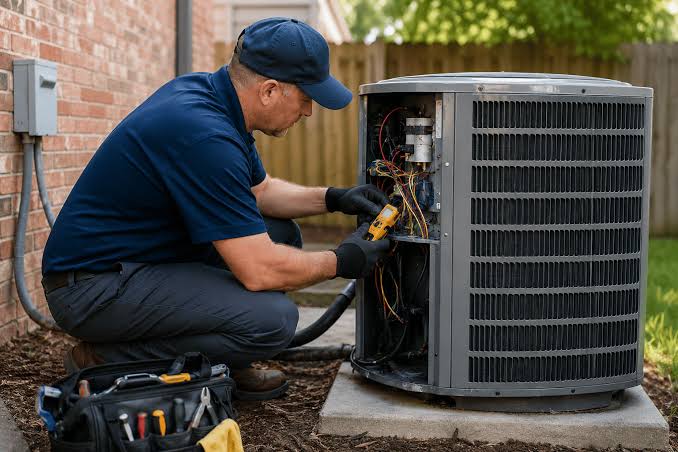
HVAC repair: real costs, sizing rules, and when replacement actually wins
⏱️ 14 min read · Last updated: 2026
HVAC repair costs can range from a small part swap to a full system replacement, and the right choice depends on system age, repair size, SEER2 efficiency, and how well the equipment is sized for your home. This guide explains the pricing, sizing rules, and replacement thresholds so you can compare HVAC repair and replacement with confidence.
- $150–$650: Typical cost for most single-component HVAC repair jobs, such as a capacitor, contactor, or blower motor
- $5,000–$12,500: Average installed cost for a standard whole-house HVAC replacement
- $6,000–$15,000: Typical installed cost for a heat pump system
- 14.3 SEER2 and 13.4 SEER2: 2026 minimums for new split-system ACs in the South/Southwest and North
- 6–9 years: Typical payback period for moving from a 13 SEER to a 16 SEER2 unit in hot climates
Your AC might fail on a hot afternoon, and two quotes can differ by more than $1,000 for the same problem. That gap is common in HVAC repair pricing because labor, refrigerant, and equipment markup change independently. Comparing a few quotes helps you spot inflated bids fast.
Home size also changes the answer. A 1,200-square-foot ranch in a humid Southern climate needs a very different system than a 2,800-square-foot two-story home in a Northern city. Capacity, SEER2 minimums, and payback math all shift with climate and layout.
This article keeps the decision practical. It covers HVAC repair vs. replacement, sizing, replacement costs, SEER2, heat pump trade-offs, condenser replacement steps, and contractor vetting.
Should I repair my old AC or replace the whole unit?
Repair is the better choice when the HVAC repair cost is less than 30–35% of a new system’s installed price and the unit is under 10 years old. Replacement usually wins when the system is older, the repair is expensive, or both conditions are true at once.
The standard shortcut is the “5,000 rule”. Multiply the repair cost by the system age in years. If the result is above $5,000, replacement is usually the smarter move.
For example, a $400 HVAC repair on a 15-year-old system equals $6,000. That points toward replacement. A $400 HVAC repair on a 5-year-old system equals $2,000. That points toward repair.
Refrigerant also matters. Systems manufactured before 2010 use R-410A refrigerant, and that refrigerant is being phased down under EPA regulations. Recharging an older system can cost more each year as supply tightens. Some contractors reported 40–60% price increases in 2024–2025 alone.
The 5,000 rule gives you a fast filter, but R-410A phase-down costs can add $200–$500 to recharge jobs by 2026 — factor that into your repair-vs-replace calculation before you approve the work.
Two HVAC repair cases usually point to replacement:
- Compressor failure on a system older than 12 years, since compressor replacement costs $1,200–$2,400 installed
- Evaporator coil leak that requires full coil replacement on an R-410A system, since coil plus refrigerant can run $1,500–$2,800
Two HVAC repair cases usually make sense:
- Failed run capacitor on a unit under 8 years old, usually a $150–$300 fix and a 30-minute job
- Contactor replacement on any system in good overall condition, usually $100–$250 for parts and labor
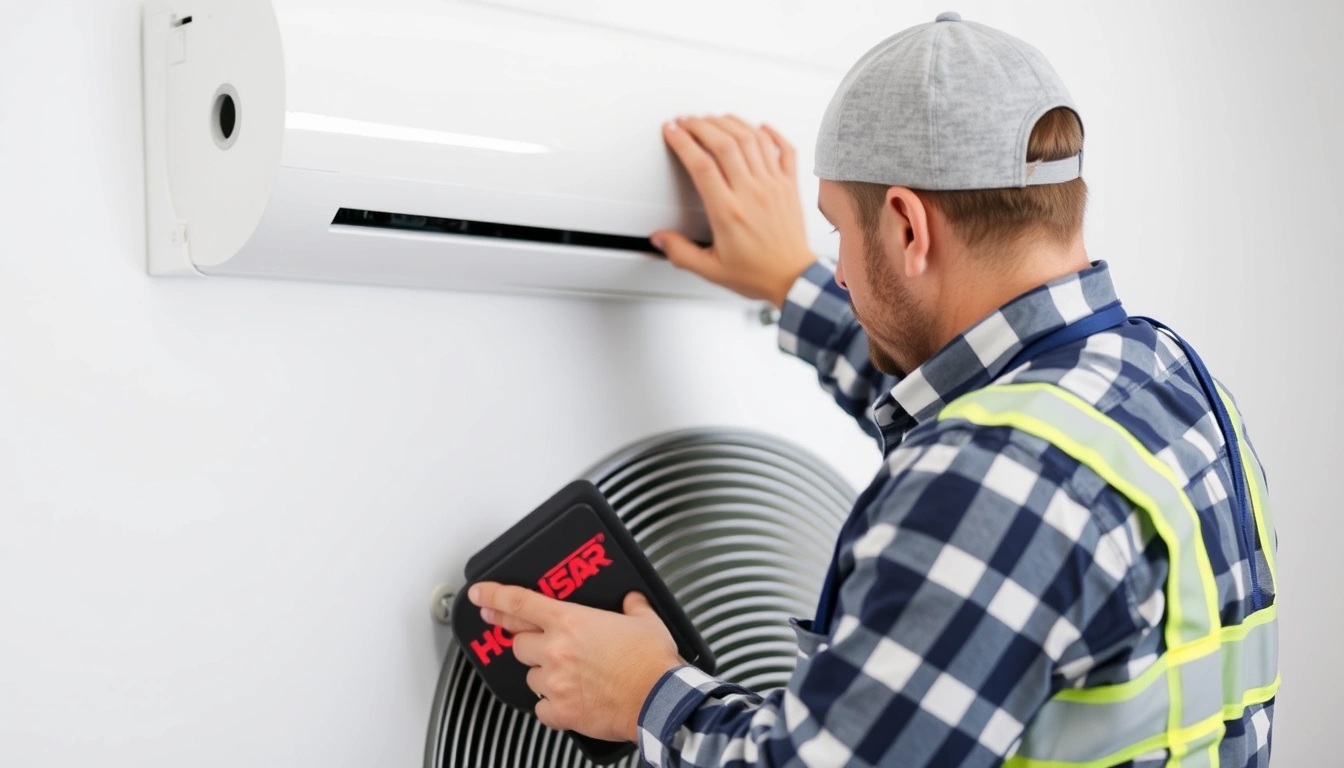
What size HVAC system do I need for my house?
The right HVAC system size comes from a Manual J load calculation, not from square footage alone. Square footage gives a starting point, but ceiling height, insulation, windows, climate, and duct layout all change the final number.
A useful rough guide for a well-insulated home in a moderate climate is 20 BTUs per square foot, or about 1 ton of capacity per 600 square feet. Hot and humid climates usually need more capacity.
| Home size (sq ft) | Estimated BTU capacity | Tons of AC needed | Adjustment for hot/humid climate |
|---|---|---|---|
| 800–1,200 | 18,000–24,000 BTU | 1.5–2 ton | Add 0.5 ton |
| 1,200–1,800 | 24,000–36,000 BTU | 2–3 ton | Add 0.5 ton |
| 1,800–2,500 | 36,000–48,000 BTU | 3–4 ton | Add 0.5–1 ton |
| 2,500–3,500 | 48,000–60,000 BTU | 4–5 ton | Add 1 ton or zone system |
Oversizing causes a common comfort problem. A system that is too large short-cycles. It cools the air quickly, shuts off, then starts again before it runs long enough to remove moisture.
In humid climates, that creates a cool but clammy house. The air handler needs 12–15 minutes of continuous run time to pull meaningful moisture from the air.
How the Manual J calculation actually works
A proper Manual J load calculation takes about 45–90 minutes for a trained installer. The contractor measures window square footage and direction, checks insulation levels, counts occupants, and factors in local design temperatures.
South-facing windows add more heat load. Poor attic insulation does the same. Duct configuration also changes the result.
If a contractor sizes your system without asking these questions, treat that as a red flag. Square-footage-only sizing is a shortcut that produces the wrong answer roughly 40% of the time, according to ACCA estimates.
Ask directly: “Will you perform a Manual J before sizing the equipment?”
How much does it cost to replace an HVAC system for a whole house?
A full HVAC system replacement usually costs $5,000–$12,500 for a standard central air conditioner and gas furnace combination, installed. Heat pump systems usually cost $6,000–$15,000. Your final price depends on home size, equipment tier, and ductwork changes.
Component pricing helps you read a quote more clearly. It also shows where the biggest cost swings happen.
| Component | Equipment cost (material only) | Installed cost (mid-tier) | Notes |
|---|---|---|---|
| Condenser unit (AC only) | $900–$2,500 | $2,200–$4,800 | Must meet SEER2 minimums by region |
| Air handler / furnace | $800–$2,200 | $1,800–$4,500 | Gas furnace adds AFUE rating variable |
| Evaporator coil | $350–$900 | $900–$2,000 | Often replaced alongside condenser |
| Thermostat (smart) | $130–$280 | $200–$450 | Ecobee or Nest standard at this tier |
| Ductwork modifications | Varies | $500–$3,000+ | Often the hidden cost in replacement jobs |
Labor is another major line item. Bureau of Labor Statistics (BLS) 2024 data puts the median HVAC mechanic wage at $59,810 annually, or about $28.75 per hour. In high-cost metro areas, experienced installers often bill $75–$110 per hour with overhead and benefits included.
A full replacement usually takes 6–10 labor hours for two technicians. That means $900–$2,200 in labor before equipment.
Ductwork is the detail many homeowners miss. If ducts are undersized, leaky, or arranged for a different system layout, modifications can add $500–$3,000.
Always ask the contractor to inspect and pressure-test the ductwork before finalizing the quote. A reputable contractor should not skip that step.
Permits also affect the total cost. Most jurisdictions require a mechanical permit for HVAC replacement, and that permit usually costs $75–$300 with inspection included.
Skipping the permit can create problems with insurance and resale value. Proper replacement, permits included, protects you later. That is similar to how a roof repair vs replacement cost decision depends on long-term value rather than the lowest upfront number.

SEER2 rating: why the new standard changes your payback math
SEER2 is the updated federal efficiency standard that replaced the original SEER metric on January 1, 2023. It uses a more realistic test that reflects higher external static pressure, which better matches real duct resistance.
A 15 SEER2 unit is roughly equivalent to a 16 SEER unit under the old standard. That matters because published efficiency numbers now compare on a different scale.
Regional minimums also changed the market in 2026:
- Northern states: 13.4 SEER2 minimum for split-system ACs
- Southern and Southwestern states: 14.3 SEER2 minimum for split-system ACs
- Heat pumps (all regions): 14.3 SEER2 minimum plus 7.5 HSPF2 for heating efficiency
Any contractor selling new equipment below those thresholds is selling non-compliant inventory. That issue appeared in 2024–2025 as distributors cleared old stock.
Ask for the SEER2 label before you sign. Then verify that the unit meets your regional minimum.
Does a higher SEER2 rating actually pay off?
The answer depends on cooling hours. A homeowner in Phoenix running AC about 2,800 hours per year gets a much faster return than a homeowner in Minneapolis running it about 900 hours per year.
On a 3-ton system, every 1-point SEER2 improvement saves roughly $35–$55 per year in electricity at average U.S. rates. Moving from a 14.3 SEER2 baseline to an 18 SEER2 unit adds $800–$1,400 to equipment cost and saves $140–$200 per year in a hot climate.
That creates a 4–7 year payback in Phoenix. In Minneapolis, the same upgrade saves $60–$90 per year, so payback stretches to 9–14 years.
Buy the higher SEER2 rating in hot climates. In cooler Northern climates, the baseline minimum is often the financially rational choice.
ENERGY STAR-certified HVAC equipment must exceed federal minimums by 15–20% — so an ENERGY STAR label on a Southern unit means at least 15–16 SEER2 in practice. That is the floor worth targeting in a high-cooling-hour market.
Heat pump vs. traditional AC: the honest trade-off in 2026
A heat pump is the right choice for most homes in 2026, but not every home. Heat pumps move heat instead of generating it, so they are 2–3 times more efficient for heating than a gas furnace at moderate temperatures.
The main trade-off is cold-weather performance. Traditional heat pumps struggle below 25–30°F and may rely on backup electric resistance heat, which reduces the efficiency advantage.
Modern cold-climate heat pumps, such as Carrier’s Infinity or Trane’s XV20i line, can maintain efficiency down to 0°F. They also cost $1,500–$3,000 more than a standard heat pump.
In places that regularly see sub-20°F winters, a dual-fuel system with a heat pump and gas furnace backup is often the most cost-effective option.
Heat pump cost vs. traditional split system: a direct comparison
| System type | Installed cost (3-ton) | Annual energy cost (moderate climate) | Best climate fit |
|---|---|---|---|
| Traditional AC + gas furnace | $6,000–$10,500 | $1,100–$1,600 | Cold winters (below 20°F regularly) |
| Standard heat pump | $6,500–$11,500 | $850–$1,300 | Mild winters (above 30°F most nights) |
| Cold-climate heat pump | $8,500–$15,000 | $700–$1,100 | Mixed climates, electrification goals |
| Dual-fuel (heat pump + gas) | $9,000–$14,000 | $900–$1,350 | Cold-winter climates, gas available |
The Inflation Reduction Act tax credit under Section 25C still applies in 2026 for qualifying heat pumps. The credit can reach $2,000 per year for the heat pump itself, plus additional credits for weatherization.
That can reduce the effective cost of a heat pump installation by $2,000–$3,200. Ask which models qualify and request the manufacturer’s certification statement before filing.
If your HVAC repair issues include condensate leaks or water intrusion, fix the root cause first. Moisture issues can create mold in the air handler and duct lining.
Some jobs also overlap with larger moisture damage. In those cases, water damage restoration contractors may need to repair drywall or subfloor damage after long-standing HVAC leaks.
Condenser replacement: what the process actually looks like step by step
Condenser replacement is the most common major HVAC repair. Knowing the correct process helps you verify the work after the job is done.
A proper condenser replacement usually takes 4–6 hours for two technicians. It should follow a clear order.
- Refrigerant recovery first. The technician connects a certified recovery machine and captures the existing R-410A refrigerant in a recovery cylinder before any disconnection. EPA Section 608 requires this. You should see the recovery machine running for 10–20 minutes before any valves open.
- Electrical disconnection at the disconnect box. The technician pulls the fused disconnect at the exterior box, then verifies zero voltage with a multimeter before touching wiring. The disconnect box should be within 10 feet of the condenser in most local codes.
- Refrigerant line disconnection. The suction line and liquid line are cut or uncoupled at the service valves. A correct cut leaves at least 6 inches of stub for reconnection. If the tech cuts flush, line extensions may add $50–$150.
- Old unit removal and pad inspection. The old condenser is removed, usually at 60–150 lbs for residential units. The pad should be checked for level and stability. A settled or cracked pad should be replaced.
- New condenser placement and line connection. The new unit is set on the pad, leveled within 1/4 inch in any direction, and connected to the refrigerant lines.
The pad matters more than many homeowners realize. A level condenser protects compressor oil return and helps the system run correctly.
New composite pads usually cost $40–$80 and take about 20 minutes to swap. That is a small price for a proper base.
Electrical work should also be checked carefully. A correct job verifies the disconnect, checks voltage, and restores power only after the system is secure.
How to vet an HVAC contractor without getting burned
The best contractor is the one who measures, explains, and documents the job. The worst one gives a fast quote without checking the house first.
Start with sizing. Ask whether the contractor will run a Manual J load calculation, and ask for the report in writing. If they cannot provide it, they likely skipped it.
Then ask about SEER2 compliance. Any new equipment should meet regional minimums, and the label should match the proposal.
Next, ask about ducts. A proper quote should mention inspection or pressure testing if the system is a replacement, not just a swap of boxes.
Finally, ask about permits and warranty. Most jurisdictions require a mechanical permit for replacement, and the contractor should be willing to obtain it.
Good questions to ask before signing:
- Will you perform a Manual J calculation?
- Will you inspect and pressure-test the ducts?
- Does this equipment meet the 2026 SEER2 minimum for my region?
- Will you pull the mechanical permit?
- What parts and labor does the warranty cover?
Keep the estimate detailed. A line-item quote is easier to compare than a single lump sum.
Key takeaways
HVAC repair is often the smarter move for younger systems and smaller fixes. Replacement becomes the better call when repair costs rise, the unit ages, or refrigerant problems keep returning.
Manual J sizing is the foundation of a correct installation. Square footage alone is not enough, and oversizing often causes comfort problems.
SEER2 rules matter because they affect what can be sold and what makes financial sense. Hot climates usually justify higher efficiency, while cooler climates often do not.
Heat pumps are now a strong option for many homes, especially with the 2026 tax credit and improving cold-climate performance. In colder regions, dual-fuel systems still make sense in many cases.
Permits, ducts, and leak checks matter as much as the equipment itself. The cheapest quote is not always the best value.
Common questions about HVAC repair
How much does HVAC repair usually cost?
Most common HVAC repair jobs cost $150–$650. Small fixes like capacitors and contactors are usually at the low end, while refrigerant-related work can cost more.
When should I replace my HVAC system instead of repairing it?
Replacement usually makes sense when the repair costs more than 30–35% of a new system, when the unit is older than 10 years, or when the 5,000 rule points toward replacement.
What size HVAC system do I need?
You need a Manual J load calculation. As a rough guide, a well-insulated home in a moderate climate needs about 20 BTUs per square foot, or about 1 ton per 600 square feet.
How much does a whole-house HVAC replacement cost?
A standard central HVAC replacement usually costs $5,000–$12,500 installed. Heat pump systems usually cost $6,000–$15,000, depending on size, equipment, and ductwork.
What is SEER2?
SEER2 is the updated federal efficiency standard that replaced SEER on January 1, 2023. It uses a more realistic test and changes the minimum efficiency levels by region.
Is a heat pump better than a traditional AC system?
A heat pump is often better in 2026 because it is highly efficient for heating and cooling. Traditional AC plus gas furnace can still be the better option in colder climates with regular sub-20°F winters.
The bottom line
HVAC repair pricing depends on the part, the age of the system, and the cost of refrigerant or labor in your market. A small HVAC repair can be the right move, but an older system with a major failure usually deserves a replacement quote too.
Use the 5,000 rule, check SEER2 minimums, and insist on Manual J sizing before any replacement. Those three steps protect you from overspending and from buying the wrong system for your home.
When the quote arrives, compare the repair cost against the full installed replacement price, not just the equipment price. That is the clearest way to decide whether to repair or replace.
See also: roof repair
See also: water damage restoration
See also: roof repair vs replacement cost decision
Related: repair or replace hvac system decision
Related: hvac permit requirements replacement
Related: hvac replacement cost by size tonnage
See also: repair or replace hvac system decision
See also: roof repair [city]
See also: water damage vs replacement drywall repair