Furnace Repair Cost: Common Problems Broken Down by Part
July 10, 2026
Furnace repair cost: common problems broken down by part and labor
⏱️ 8 min read · Last updated: 2026
- Furnace igniter replacement cost: $150–$300 total (part: $20–$80; labor: $100–$200), typically completed in under one hour.
- Blower motor replacement cost: $400–$1,500 depending on motor type (ECM motors run higher at $800–$1,500; PSC motors average $400–$700).
- Heat exchanger repair or replacement cost: $1,000–$3,500; most HVAC technicians recommend full furnace replacement when the heat exchanger is cracked on a unit older than 15 years.
- Flame sensor cleaning cost: $80–$150 as a standalone service call — often the cheapest fix when a furnace short-cycles or won’t stay running.
- Diagnostic fee: $75–$150 in most U.S. markets; many contractors apply this fee toward the repair cost if you proceed with the job.
Understanding the real furnace repair cost for common problems changes the conversation and protects you from overpaying. Most furnace repair costs between $150 and $1,500 in 2026, but the specific component that has failed dictates the price. This breakdown gives you accurate, part-by-part numbers so you can recognize a fair quote and avoid upselling on jobs that take less than an hour.
What does each furnace part actually cost to repair?
Furnace repair costs vary more by component than by any other factor, including location. Four parts account for the vast majority of service calls, and each carries a distinct cost profile:
| Component | Part cost (2026) | Labor (typical) | Total range | Job time |
|---|---|---|---|---|
| Furnace igniter | $20–$80 | $100–$200 | $150–$300 | 30–60 min |
| Flame sensor | $5–$25 (or cleaning only) | $75–$125 | $80–$150 | 20–45 min |
| Blower motor (PSC) | $100–$250 | $200–$400 | $400–$700 | 1–2 hours |
| Blower motor (ECM) | $400–$800 | $300–$500 | $800–$1,500 | 1.5–3 hours |
| Heat exchanger | $500–$2,000+ | $500–$1,000+ | $1,000–$3,500 | 4–8 hours |
The gap between a flame sensor cleaning and a heat exchanger replacement is roughly $3,000 — the difference between a routine tune-up item and a repair that exceeds many older furnaces’ value. Knowing which category your problem falls into before you call is the single most valuable step you can take.
How much does it cost to fix a furnace that won’t turn on?
A no-start furnace most commonly costs $150–$300 to fix because a failed igniter is the leading cause, and igniter replacement is a straightforward, low-labor job. The exact answer shifts depending on what has actually failed, but a few minutes of observation can narrow it down quickly.

Here’s the diagnostic sequence technicians follow — and what each step tells you about furnace repair cost:
- Check the thermostat and power supply first. A tripped breaker or dead thermostat battery is a free fix. Verify these yourself before calling anyone.
- Listen for the igniter. On most modern gas furnaces, you’ll hear a faint click-click-click when it tries to light. No sound at all points to the igniter or control board.
- Watch for the flame. Burners that light briefly then shut off within 2–3 seconds almost always signal a dirty flame sensor — a different part with a cheaper fix.
- Read the LED error codes. Most furnaces manufactured after 2000 have a blink code on the control board panel. Count the blinks and match them to the label inside the service door.
- Note unusual smells or sounds. A burning smell with no heat suggests a blower motor problem. Metallic banging may indicate a cracked heat exchanger — a carbon monoxide risk that requires immediate professional attention.
- Describe the symptom precisely when calling. “The igniter clicks but the burners don’t light” gets a faster, cheaper diagnosis than “it just stopped working.”
A furnace igniter replacement — the most common cause of a no-start furnace — costs $150–$300 total in 2026, and most technicians complete the job in under an hour.
Why is a cracked heat exchanger so expensive to replace?
Heat exchanger replacement costs $1,000–$3,500 because the component is structurally integrated into the furnace — not a bolt-on part. Replacing it requires 4–8 hours of labor ($500–$1,000) and an OEM part ($500–$2,000) specific to brands like Carrier, Lennox, or Trane.
This metal chamber separates combustion gases — including carbon monoxide — from the air circulating through your home. When it cracks, those gases can enter your living space. Most technicians shut the furnace down immediately upon confirming a crack; deferring this repair is not an option.
For furnaces older than 15 years, a cracked heat exchanger typically tips the decision toward replacement. A new mid-efficiency furnace runs $2,500–$4,500 installed — not dramatically more than the repair — and comes with a full warranty. The repair or replace hvac system decision framework helps you work through this systematically.
How can you diagnose your furnace before calling a technician?
A basic self-diagnosis won’t replace a professional, but it shortens diagnostic time and prevents upselling on parts you don’t need. Walk through these steps to build an intelligent conversation with your tech:
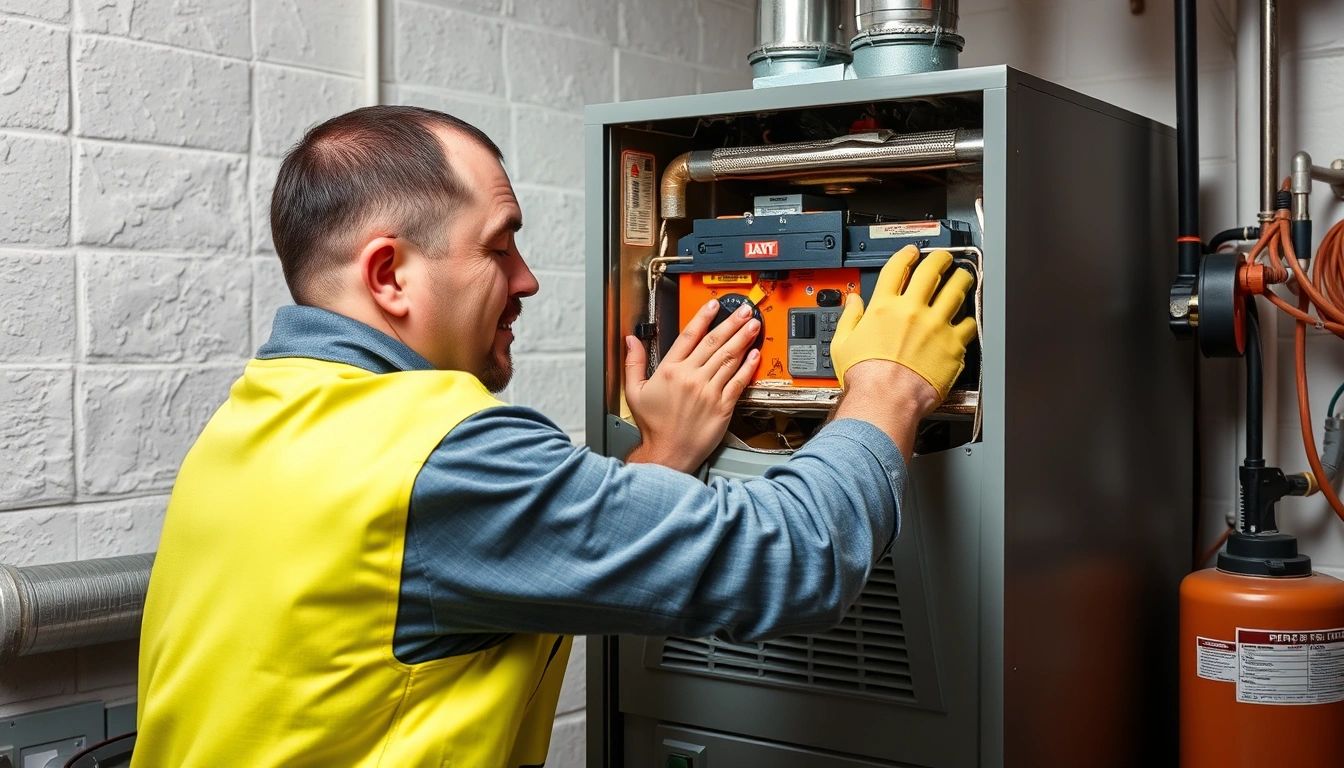
- Check the air filter. A clogged filter causes more furnace problems than any single component failure. Hold it to light — if you can’t see through it, replace it before calling. Restricted filters trigger high-limit switches and mimic part failures.
- Verify thermostat settings and battery. Set to heat mode, raise the setpoint 5° above room temperature, and wait 60 seconds. Swap batteries if nothing happens.
- Confirm the furnace power switch is on. It looks like a light switch and gets turned off accidentally more often than you’d expect.
- Read the LED blink codes. Open the service panel and count the blink sequence — 3 blinks mean something different from 4 blinks. Match the pattern to the label inside the door.
- Observe the startup sequence. A healthy furnace follows this order: inducer motor hum → igniter glow → burner ignition (soft whomp) → blower motor start (60–90 seconds later). Any break reveals the failed component.
- Inspect the flame color. Blue with small orange tips is healthy. Yellow or mostly orange indicates incomplete combustion — possibly a cracked heat exchanger. Turn the furnace off and call a professional immediately.
| Symptom | Most likely cause | Typical repair cost | DIY possible? |
|---|---|---|---|
| Won’t start at all | Furnace igniter or control board | $150–$600 | Igniter: sometimes. Board: no. |
| Starts, then shuts off in 2–3 sec | Dirty flame sensor | $80–$150 | Yes, with care |
| Runs but no heat at vents | Blower motor or gas valve | $400–$1,500 | No |
| Yellow/orange flame | Cracked heat exchanger | $1,000–$3,500+ | No — shut it down |
| Loud banging on startup | Delayed ignition or dirty burners | $100–$300 | No |
| Blower runs continuously | Limit switch or thermostat wiring | $100–$400 | Thermostat: yes. Switch: no. |
When should you replace instead of repair your furnace?
A furnace repair makes financial sense when the cost stays below 50% of a new unit’s price and the furnace is under 15 years old. Beyond that threshold, you’re often paying to extend a system that will need another expensive repair within 2–3 heating seasons.
The “$5,000 rule” used by many HVAC contractors provides a quick check: multiply furnace age by estimated repair cost. A 12-year-old furnace needing a $300 igniter repair scores $3,600 — repair it. That same furnace needing a $1,500 blower motor scores $18,000 — replace it.
Labor rates vary meaningfully by city. San Francisco and New York run 40–60% higher than smaller Midwest markets. Before getting a quote, check a city-specific breakdown — the hvac repair guide covers labor rate differences across major U.S. markets.
One detail most articles skip: many municipalities require a permit for furnace replacement but not for repair, and skipping the permit can affect your homeowner’s insurance.
What does a thorough technician check during a furnace diagnostic?
A complete diagnostic visit should take 45–75 minutes and cover more than the broken part. Technicians who fix only the symptom often see the same failure return within six months. Expect these tests from a thorough technician:
- Combustion analysis: CO levels at the flue and in the air stream confirm or rule out a cracked heat exchanger without guesswork.
- Blower motor amp draw test: A motor drawing above its nameplate rating is working too hard — often due to a dirty wheel or failing bearings. Replacing the motor without cleaning the wheel means the new one fails faster.
- Static pressure check: High ductwork pressure stresses both the blower motor and heat exchanger. If your duct system is restricted, every part you replace is on borrowed time.
- Flame sensor microamp reading: Below 1.0 microamps signals replacement regardless of how clean the sensor looks — not just a cleaning.
Flame sensor cleaning costs $80–$150 and is the most frequently overlooked fix for a furnace that starts then immediately shuts off — it’s also one of the few furnace repairs a careful homeowner can do themselves with a $3 emery cloth.
- The most common furnace repair — igniter replacement — costs $150–$300 and takes under an hour; don’t assume you’re facing a major repair until a tech confirms the diagnosis.
- A cracked heat exchanger is the one furnace repair that is both expensive ($1,000–$3,500) and a potential safety risk — always get a second opinion before approving it.
- Flame sensor cleaning at $80–$150 is the cheapest fix for a furnace that won’t stay running, and it’s often DIY-able with the right information.
- The $5,000 rule (furnace age × repair cost) is a reliable first-pass test for whether repair or replacement is the smarter financial call in 2026.
Common questions about furnace repair cost
How much does a furnace repair cost in 2026 for an average home?
Most residential furnace repairs in 2026 fall between $150 and $1,500. Simple fixes like flame sensor cleaning run $80–$150. Igniter replacement averages $150–$300. Blower motor replacement costs $400–$1,500 depending on motor type (PSC vs. ECM). A cracked heat exchanger is the outlier at $1,000–$3,500.
What are the most common furnace repair problems technicians see?
The five most common furnace repair problems are: failed igniters ($150–$300), dirty or failed flame sensors ($80–$150), blower motor failures ($400–$1,500), cracked heat exchangers ($1,000–$3,500), and dirty or clogged filters (often free to replace yourself). Igniter and flame sensor issues together account for the majority of service calls.
Can I clean a flame sensor myself instead of paying for a service call?
Yes, in many cases you can. The flame sensor is a single metal rod held by one screw. You can remove it, gently clean it with fine emery cloth (not steel wool), and reinstall it. The process takes about 10 minutes and avoids an $80–$150 service call. If the furnace still short-cycles after cleaning, the sensor likely needs professional replacement — cleaning a failed sensor doesn’t fix it.
How do I know if my furnace heat exchanger is cracked?
Warning signs include a yellow or orange burner flame (instead of blue), a metallic smell or banging sound during startup, visible soot around the furnace, and carbon monoxide detector alerts. However, many cracks are invisible to the naked eye. A legitimate technician confirms a cracked heat exchanger using a combustion analyzer to measure CO levels in the air stream — not just a visual glance. Always ask for this test before approving a $1,000+ repair.
Is it worth repairing a furnace that is 15 years old?
It depends on the repair cost. Use the $5,000 rule: multiply the furnace age (15) by the repair estimate. A $300 igniter repair scores $4,500 — still worth repairing. A $500 blower motor scores $7,500 — replace the unit instead. Most HVAC technicians also recommend full replacement over heat exchanger repair once a furnace passes the 15-year mark, since a new mid-efficiency unit ($2,500–$4,500 installed) includes a full warranty and isn’t dramatically more expensive.
See also: hvac repair [city]
See also: roof repair [city]
See also: repair or replace hvac system decision
Related: Heat Pump vs Furnace Comparison: Which Wins in You