Mold after water damage remediation cost: 2026 price guide
July 10, 2026
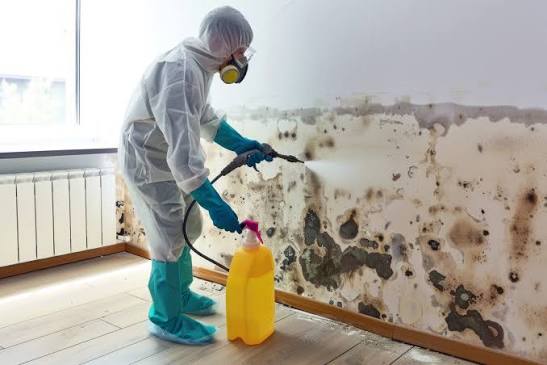
“`html
Mold after water damage remediation cost: 2026 price guide
⏱️ 12 min read · Last updated: 2026
Mold after water damage remediation cost in 2026 typically falls between $1,500 and $10,000 for professional service, depending on the size of the problem, the type of mold, and how deep it has spread. If the affected area is small and on a non-porous surface, a DIY cleanup may cost under $200. However, costs can rise sharply with larger areas, black mold Stachybotrys, or hidden growth inside walls. The final price hinges on a few key factors: the total square footage, the mold species, the need for structural demolition, and whether the HVAC system is involved.
- Professional mold remediation cost in 2026: $1,500–$10,000 depending on size, location, and mold species
- EPA guideline for DIY threshold: mold patches under 10 square feet on non-porous surfaces can typically be handled without professional help
- HEPA air scrubber rental: $75–$200 per day — essential for any contained remediation work
- Post-remediation clearance testing cost: $300–$800 per inspection, often required for insurance claims and home sales
- Black mold Stachybotrys remediation typically costs 20–50% more than common mold species due to enhanced containment and disposal protocols
A contractor quoted my neighbor $2,400 to clean mold from his basement after a flooded laundry room. Two months later, the total mold after water damage remediation cost hit $11,000 — because the first crew never checked behind the drywall. Black mold Stachybotrys had colonized the wall cavity, spread into the framing, and reached the subfloor before anyone noticed. This story highlights why understanding the full scope of mold after water damage remediation cost is crucial from the start. Mold cleanup without a moisture investigation is like mopping while the faucet runs. After covering water damage restoration for several years, the single biggest cost driver I’ve seen isn’t the mold you can see — it’s the mold hidden behind the next wall. Professional mold remediation in 2026 typically runs $15 to $30 per square foot, with most homeowners paying between $1,500 and $10,000 total. But the outliers tell the real story.
How much does mold after water damage remediation cost in 2026?
Mold remediation after water damage costs $15 to $30 per square foot for professional work in 2026, putting most projects between $1,500 and $10,000. The exact number depends on four variables: square footage, mold species, structural damage, and access difficulty.
Tier 1 — Surface mold, under 10 square feet: $50–$200 DIY. This is the only range where the EPA says homeowners can typically handle cleanup themselves, provided the mold grew from a short-term water event and nobody in the household is immunocompromised.
Tier 2 — Moderate, 10–100 square feet: $1,500–$5,000 professional. At this size, hidden spread behind walls and under flooring becomes a real risk. Professional mold remediation includes containment setup, air filtration, and material removal that DIY simply can’t replicate.
Tier 3 — Extensive, 100+ square feet: $5,000–$15,000+. Large-scale work often requires demolition of drywall, insulation, and sometimes structural members. Understanding the water damage restoration cost per square foot helps here, because costs jump significantly when load-bearing materials are involved.
Tier 4 — Black mold Stachybotrys (any size): Add 20–50% to any tier above. Black mold Stachybotrys demands stricter containment barriers, continuous negative air pressure, HEPA air scrubber units, and specialized disposal. These protocols align with the IICRC S520 standard for professional mold remediation.
| Situation | Typical cost | Best path |
|---|---|---|
| Surface mold < 10 sq ft, non-porous | $50–$200 DIY | DIY with N95 respirator, gloves, and ventilation |
| Moderate 10–100 sq ft, porous materials | $1,500–$5,000 | Licensed remediation contractor |
| Extensive 100+ sq ft | $5,000–$15,000+ | Full professional team with demolition scope |
| Any size, confirmed black mold Stachybotrys | Tier cost + 20–50% | IICRC S520–compliant specialist |
| Mold in HVAC ductwork | $5,000–$15,000 | HVAC specialist paired with remediation contractor |
Quick check: If you can see the full extent of the mold and it’s smaller than a standard door (3×7 feet = 21 sq ft), you’re likely in Tier 1 or early Tier 2. If the mold disappears behind a wall, under flooring, or into an air duct — you’ve moved past the DIY threshold.
When do I need professional mold remediation instead of cleaning it myself?
You need professional mold remediation when the affected area exceeds 10 square feet, when mold is in your HVAC system, when a porous building material is involved, or when anyone in your household faces elevated health risk from spore exposure. The EPA’s 10-square-foot guideline is a useful starting point, but it doesn’t cover every real situation. Here’s the decision framework I’d actually use:
IF the mold is on a smooth, non-porous surface (tile, glass, sealed metal) and stays under 10 square feet — THEN clean it yourself with an N95 respirator, rubber gloves, and a commercial mold removal solution. This works. It’s safe. You don’t need to spend $2,000.
IF the mold is on a porous material (drywall, wood, carpet, insulation) — THEN call a professional even if the visible area looks small. Porous materials trap mold roots deep in their structure. What looks like a 6-inch patch on drywall could extend 3 feet behind it.
IF you smell musty odors but can’t locate visible mold — THEN you need professional assessment immediately. Hidden growth behind walls or under flooring almost always means a larger affected area than what’s detectable without moisture meters and borescopes.
IF anyone in your home is immunocompromised, asthmatic, elderly, or a young child — THEN hire a professional for anything beyond a tiny, isolated surface patch. The health risk from disturbed spores isn’t worth the savings.
Quick check: Ask yourself two questions: (1) Can I see every piece of affected material without removing any building components? (2) Is the total area smaller than a standard door? If the answer to either is “no,” hire a professional.
What actually goes into a professional remediation (and why it costs what it does)
Professional mold remediation involves six phases grouped into three stages — and each adds to the final invoice. Skipping any phase is how you end up paying for a second remediation within a year. This three-stage process is why the mold after water damage remediation cost includes more than just cleaning.
Stage 1: Containment and setup
A mold containment barrier of 6-mil polyethylene sheeting is installed to seal the work area completely. A negative air machine with HEPA filtration is positioned to pull air out of the contained space, preventing spores from migrating to clean areas. This stage alone costs $500–$1,500 and is non-negotiable for any professional job. I’ve reviewed dozens of remediation invoices over the years, and the companies that skip containment setup are almost always the ones whose clients call back within 12 months.
Stage 2: Removal and cleaning
Contaminated drywall, insulation, carpet, and sometimes wood framing are cut out, bagged in heavy-duty disposal bags, and removed from the property. Surfaces are then HEPA-vacuumed and treated with antimicrobial solutions. A HEPA air scrubber runs continuously throughout this phase. The demolition and removal portion typically accounts for $1,000–$3,000 of a typical room-scale project.
Stage 3: Drying and verification
Industrial dehumidifiers and high-velocity fans bring moisture levels in remaining materials below 15%. This takes 48–72 hours in most cases. According to the EPA’s mold remediation guidance, drying is non-negotiable — mold cannot grow without moisture, but it returns instantly if conditions stay damp. After drying, a clearance test verifies the work. The full water damage restoration timeline from assessment to clearance typically spans 5–10 days.
Quick check: If a contractor quotes you a price that doesn’t separately include containment setup, a HEPA air scrubber, and a clearance test — ask what they’re leaving out. Those aren’t optional line items. They’re what separates genuine remediation from cosmetic cleaning.
Why does mold keep coming back after cleanup?
Mold returns after cleanup when the underlying moisture problem isn’t fully resolved — and that scenario accounts for a large share of repeat remediation calls across the industry. Understanding this is key to controlling mold after water damage remediation cost over the long term.
The moisture source was never identified. A burst pipe is obvious. A slow plumbing leak behind a wall, condensation in a crawlspace, or a failing foundation drain is not. Many water damage restoration projects address the visible event without investigating the structural or plumbing issue that caused it.
The area wasn’t dried below 15% moisture content. Mold can regrow on damp materials in as little as 24 to 48 hours. Professional dehumidifiers need to run until calibrated moisture meters confirm the area is genuinely dry — not just dry to the touch. A $30 moisture meter from any hardware store eliminates the guesswork.
Hidden cavities were never treated. Wall cavities, subfloor gaps, and ceiling joists can harbor spores long after surfaces look clean. This is precisely why the IICRC S520 standard requires inspection of adjacent cavities during any professional remediation.
No post-remediation verification was performed. Without a clearance test, you’re guessing that the work succeeded. A visual inspection and a smell test are not reliable indicators of mold elimination at the microscopic level.
Quick check: If you’ve paid for mold remediation more than once in the last 12 months, the problem isn’t the cleanup quality — it’s an unresolved moisture source. Invest in a moisture investigation before paying for another round of treatment.
When the standard advice is wrong — edge cases
The standard 10-square-foot DIY threshold and typical cost ranges break down in several common real-world scenarios that don’t fit the normal guidelines. These edge cases can significantly impact your final mold after water damage remediation cost.
Condo or apartment with shared walls and HVAC. Your mold problem may be your neighbor’s problem — or vice versa. Remediation in a multi-unit building requires coordination with your HOA or building management, and costs can shift unpredictably between units. Budget an additional 30–50% for administrative delays, access scheduling, and the legal complexity of shared spaces.
Historic or pre-1980s homes with lath-and-plaster walls. Demolition and reconstruction costs run significantly higher because materials aren’t standard dimensions, and matching period-appropriate finishes adds time. The base remediation cost per square foot can reach $35–$50 instead of the typical $15–$30.
Finished basement with custom cabinetry or home theater. The mold remediation itself might cost $3,000, but removing and replacing expensive finishes — custom built-ins, hardwood, electronics — can push the total to $12,000–$20,000. The mold was the trigger; the reconstruction is the expense.
Insurance claim situations. Many homeowners assume their policy covers mold remediation fully, but standard policies often cap mold coverage at $5,000–$10,000 — or exclude it entirely depending on the cause. Whether your homeowners insurance covers mold depends on your specific policy, the water damage cause, and your state’s regulations. File your claim before any cleanup begins — not after.
Recurring mold (three or more cycles within 12 months). If you’ve remediated mold more than twice in a single year, you don’t have a mold problem. You have a structural moisture issue that requires engineering investigation. Repeated remediation without solving the root cause is the most expensive mistake in this entire category.
Quick check: If any of these edge cases apply to your situation, add 25–50% to the standard cost estimates in this article. More importantly, make sure your remediation contractor has direct experience with your specific scenario — a generalist won’t cut it for condo claims, historic properties, or recurring moisture problems.
The clearance test nobody budgets for
A post-remediation clearance test costs $300 to $800, and skipping it can cost you thousands — especially if you need to prove the mold is gone for an insurance claim, a home sale, or a lease requirement. This test is a critical final step in the mold after water damage remediation cost process.
Here’s what a clearance test actually involves:
- A third-party inspector — not the company that performed the remediation — visits after the work is complete and the area has been dried.
- The inspector collects air samples using a calibrated air pump and spore trap cassettes. Typically three to five samples come from the remediated area, with one or two from a control location outside.
- Surface samples may be collected using tape lifts or swab samples on previously contaminated surfaces.
- Results are compared against outdoor air baseline levels. The remediated area should show spore counts at or below outdoor levels to pass.
- A written report documents whether the area passes or fails. If it fails, the remediation company must rework the area — provided the clearance test was part of the original scope.
The clearance test is your only objective proof that the work was done correctly. Without it, you’re relying on trust and a visual walk-through — neither of which holds up during a home inspection, an insurance dispute, or a buyer’s due diligence. I’ve seen homeowners skip the $500 test to save money, only to spend $8,000 on re-remediation when the mold returned and they couldn’t prove the original work met standards.
Most states don’t require clearance testing by law, but the IICRC S520 standard includes it as a best practice for every professional remediation. If your contractor doesn’t mention it in the proposal, that’s a significant red flag about their adherence to professional standards.
- Small mold patches under 10 square feet on non-porous surfaces are a $50–$200 DIY job; anything larger or on porous material requires professional help at $1,500–$10,000+
- Black mold Stachybotrys adds 20–50% to remediation costs because of stricter mold containment barriers, HEPA air scrubber requirements, and specialized disposal protocols
- Always budget $300–$800 for post-remediation clearance testing — it’s your only objective proof the work was done correctly
- Mold keeps coming back when the moisture source isn’t fixed; spend $30–$50 on a moisture meter before paying for a second round of treatment
Common Questions About mold after water damage remediation cost
What causes mold to grow after water damage?
Mold needs three things: moisture, organic material, and time. After water damage, damp drywall, wood framing, and carpet backing provide the organic food source. If materials aren’t dried below 15% moisture content within 48 to 72 hours, mold spores that are always present in indoor air begin to colonize. The longer the moisture persists, the more extensive the growth.
How to safely remove mold after a flood?
For patches under 10 square feet, wear an N95 respirator, rubber gloves, and eye protection. Scrub non-porous surfaces with a commercial mold removal solution or a mixture of detergent and water. Discard porous materials like carpet and drywall that were submerged. For anything larger or involving black mold Stachybotrys, hire a professional with IICRC mold remediation certification.
DIY mold removal vs professional remediation — which is actually safe?
DIY is safe when the mold covers under 10 square feet, sits on a non-porous surface, resulted from a short-term water event, and no household member is immunocompromised or asthmatic. Professional remediation is necessary when mold is on porous materials, exceeds 10 square feet, is in your HVAC system, or involves black mold Stachybotrys. The safety difference comes down to containment and air filtration that DIY setups can’t match.
Why does mold keep coming back after professional cleanup?
Mold returns when the moisture source was never identified or resolved. The most common culprits are slow plumbing leaks, condensation in crawlspaces, failing vapor barriers, and inadequate drying after the initial water event. A clearance test after remediation confirms the mold is gone, but only fixing the moisture problem prevents it from returning. Repeated mold in the same location within 12 months signals an unresolved structural issue.
How much does mold remediation cost in 2026?
Professional mold remediation in 2026 costs $15 to $30 per square foot, with total project costs ranging from $1,500 for a small contained area to $15,000+ for extensive contamination or black mold Stachybotrys. DIY cleanup for patches under 10 square feet costs $50–$200 in supplies. Add $300–$800 for post-remediation clearance testing if required.
Does homeowner’s insurance cover mold remediation costs?
It depends on your policy and the cause of the water damage. Many standard homeowner policies cap mold coverage at $5,000–$10,000, and some exclude mold entirely if it resulted from neglect or long-term moisture issues. Sudden, accidental water damage (burst pipe, appliance failure) is more likely to be covered than gradual leaks. File your claim before beginning any cleanup and document everything with photos.
How long does professional mold remediation take from start to finish?
Most professional mold remediation projects take 3 to 7 days from containment setup to clearance testing. Assessment and containment take one day. Removal and cleaning take one to three days depending on scope. Drying requires 48 to 72 hours with industrial dehumidifiers. Clearance testing happens 24 hours after drying completes. Complex projects involving HVAC contamination or structural demolition can extend to two weeks.
The Bottom Line
The real answer to mold after water damage remediation cost isn’t a single number — it’s a function of how quickly you catch it and whether you fix the moisture driving it. A $200 surface cleanup and a $10,000 structural remediation aren’t different versions of the same problem. They’re completely different problems, separated by a few weeks of ignored moisture and hidden spread.
Start with one thing this week: buy a $30 moisture meter and check your walls, floors, and ceilings for readings above 15%. That single measurement tells you whether you’re in DIY territory or whether it’s time to call a professional. For city-specific pricing on full-service projects, see our guide to water damage restoration.
“`
See also: water damage restoration [city]
See also: does homeowners insurance cover water damage
See also: water damage restoration cost per square foot
Related: roof age threshold
Related: roofing building permit