HVAC Replacement Cost by Size Tonnage: 2026 Pricing Guide
July 10, 2026
“`html
HVAC replacement cost by size tonnage: 2026 pricing by ton, SEER2, and duct condition
⏱️ 7 min read · Last updated: 2026
HVAC replacement cost by size tonnage typically runs $1,500–$2,800 per ton installed for a standard split system, putting a 2-ton unit at $3,800–$6,500 and a 5-ton unit at $7,500–$16,000 or more depending on SEER2 rating, duct condition, labor market, and whether you need a condenser unit, an air handler, or both. In 2026, the same home can receive quotes that differ by thousands of dollars for legitimate reasons. This guide breaks down what each tonnage size typically costs, how SEER2 efficiency tier changes the upfront price, when ductwork turns a straightforward replacement into a much larger project, and how to compare quotes so you are always evaluating the same scope of work.
- Cost per ton HVAC: Commonly $1,500–$2,800 per ton installed for a mid-efficiency split system in 2026.
- 3-ton AC replacement cost installed: Typically $4,500–$8,500 depending on SEER2 rating, brand, and region.
- SEER2 upgrade cost premium: Moving from SEER2 14.3 to SEER2 18+ adds approximately $800–$2,500 to the installed price.
- Ductwork replacement add-on cost: Replacing a full duct system in a 1,500–2,500 sq ft home commonly adds $2,000–$6,000 to the project total.
- Total by home size: A 1,000–1,500 sq ft home (2-ton system) typically runs $3,800–$6,500 installed; a 2,500–3,500 sq ft home (4–5 ton) runs $7,500–$14,500+.
A neighbor of mine got three quotes for a new system last summer. The lowest was $5,200. The highest was $9,800. Same 3-ton capacity, same house. The difference came down to SEER2 rating, ductwork condition, and whether the contractor was pricing an air handler replacement or just the condenser unit. Understanding HVAC replacement cost by size tonnage means knowing which of those variables is driving your number and which ones you can actually control.
The frustrating part is that most quotes do not break things down. You get a total and a brand name. What you actually need is a cost framework: what each ton of BTU capacity costs, what moving up in SEER2 adds, and when duct problems turn a $6,000 job into a $10,000 one. That is what this article gives you.
What each ton of HVAC capacity actually costs in 2026
HVAC replacement cost per ton installed commonly runs $1,500–$2,800 per ton in 2026. That price includes equipment, labor, permits, and a basic refrigerant charge for a standard split system. The range is wide because a builder-grade 14.3 SEER2 unit costs far less than a variable-speed 18+ SEER2 system with a two-stage air handler.
A ton of cooling capacity equals 12,000 BTU per hour. Residential systems run from 1.5 tons for small apartments and studios up to 5 tons for large homes over 3,000 sq ft. Most single-family homes in the 1,200–2,400 sq ft range need 2–3.5 tons, which is why HVAC replacement cost by size tonnage matters so much during quotes. To understand how tonnage affects your specific heating side as well, see our breakdown of heat pump vs. furnace options by home size.
| System size | Typical home size | Installed cost range (mid-efficiency) | Installed cost range (high-efficiency SEER2 18+) |
|---|---|---|---|
| 1.5 ton | 700–1,000 sq ft | $3,200–$4,800 | $4,500–$6,500 |
| 2 ton | 1,000–1,500 sq ft | $3,800–$6,000 | $5,500–$7,800 |
| 2.5 ton | 1,200–1,800 sq ft | $4,200–$6,800 | $6,000–$9,000 |
| 3 ton | 1,500–2,200 sq ft | $4,500–$8,500 | $7,500–$11,000 |
| 3.5 ton | 1,800–2,500 sq ft | $5,200–$9,200 | $8,500–$12,000 |
| 4 ton | 2,200–3,000 sq ft | $6,000–$10,500 | $9,500–$13,500 |
| 5 ton | 3,000–3,800 sq ft | $7,500–$12,500 | $11,000–$16,000+ |
These figures assume a standard split system with a matching condenser unit and air handler, professional installation, and basic permits in a mid-cost labor market. High-cost metro areas such as New York, San Francisco, and Boston typically add 20–35% to the labor portion. That is one reason HVAC replacement cost by size tonnage varies so much from city to city. For a broader view of local labor rates, the HVAC repair city cost guide shows how metro area affects your total.
Quick check: If you do not know your current system’s tonnage, look for a two-digit number divisible by 6 or 12 in the model number on the outdoor condenser unit. Those digits usually represent BTU capacity in thousands, so “36” means 36,000 BTU, which is 3 tons.
Why does a higher SEER2 system cost so much more upfront?

A higher SEER2 system costs more upfront because it uses more sophisticated compressor technology. Variable-speed and two-stage compressors are engineered to modulate output based on demand rather than cycling fully on or fully off, which is what makes them more energy-efficient and more expensive to manufacture. SEER2, which stands for Seasonal Energy Efficiency Ratio 2, is the updated federal efficiency standard that replaced the old SEER metric in 2023. It uses a more realistic test procedure, so SEER2 ratings run about 4–5% lower than equivalent old SEER numbers.
The minimum SEER2 rating varies by region. The U.S. Department of Energy mandates at least SEER2 14.3 in northern states and SEER2 15.2 in southern states, where cooling loads are higher. That federal baseline is your floor, and anything below it cannot legally be sold as new equipment. Understanding where your region falls determines which efficiency tiers are even available to you, so it is worth confirming before comparing quotes.
Moving from a SEER2 14.3 to a SEER2 18 system on a 3-ton unit typically adds $800–$2,500 to the installed price but can reduce annual cooling costs by 20–30% depending on your climate and annual cooling hours.
In Phoenix or Dallas, where central air runs 2,000 or more hours a year, a high-efficiency unit can pay back the upfront premium in 4–7 years through lower energy bills. In Minneapolis, where you might run AC for only 800 hours annually, the same unit might take 10–14 years to recover that premium. That timing matters significantly if you plan to sell in 5 years, which means HVAC replacement cost by size tonnage should always be evaluated alongside your expected ownership horizon. For more on how climate affects the repair-or-replace math, the repair or replace HVAC decision guide walks through the full calculation.
SEER2 tier comparison: what you actually get
| SEER2 tier | Compressor type | Upfront premium vs. base | Best for |
|---|---|---|---|
| SEER2 14.3–15 | Single-stage | Baseline | Short-term ownership, budget installs |
| SEER2 16–17 | Two-stage | +$500–$1,200 | Moderate climates, 7+ year ownership |
| SEER2 18–21+ | Variable-speed | +$1,500–$3,500 | Hot climates, long-term ownership, rebate eligibility |
Quick check: If you live in a climate with more than 1,200 annual cooling hours, which includes most of the South, Southwest, and parts of the Midwest, the SEER2 18+ tier is worth pricing out seriously. If you are north of the Mason-Dixon line and plan to sell within 6 years, SEER2 16 is usually the sweet spot.
The ductwork variable that quietly doubles your bill
Ductwork replacement adds $2,000–$6,000 to a standard HVAC installation and is the single most likely hidden cost in any quote. Contractors who price low on equipment often assume existing ductwork is usable. If your ducts are original to a home built before 1990, have flex duct with collapsed sections, or are poorly sealed and uninsulated, a new high-efficiency system will underperform significantly regardless of its SEER2 rating.
An air handler pushing conditioned air through leaky ducts loses an estimated 20–30% of its output before it reaches your living space, according to the U.S. Department of Energy’s duct efficiency guidance. That means a SEER2 18 system running through bad ducts can perform worse than a SEER2 14.3 unit in a tight duct system. For HVAC replacement cost by size tonnage, duct quality can matter as much as tonnage itself.
How to assess your duct situation before getting quotes
- Pull a return air grille and look inside with a flashlight. You want to see smooth metal duct or intact flex duct, not crushed sections, disconnected joints, or visible gaps.
- Hold your hand near supply registers while the system runs. Weak airflow from registers far from the air handler often signals duct leakage or undersized trunks.
- Ask any contractor quoting the job to do a duct blaster test, also called a duct leakage test. It takes about 30 minutes and tells you exactly how much air is escaping. Industry standard is less than 10% leakage.
- Check insulation levels in your attic ducts. Ducts in unconditioned attic space should be wrapped in at least R-6 insulation, and R-8 in hot climates. Anything less is losing you efficiency every hour the system runs.
- Get a separate ductwork line item in every quote, not a bundled number. This is the only way to compare apples to apples across contractors.
Permits are another ductwork variable that can affect your project timeline and final cost. Verify what permits your local jurisdiction requires before scheduling any work, since some municipalities require separate permits for ductwork versus equipment swaps. You can check the specific hvac permit requirements replacement rules for your area. Skipping a required permit can void your equipment warranty and create problems at resale.
Quick check: If your home was built before 1990 or you have never had a duct inspection, budget for at least $500–$1,000 in duct repairs as a baseline. Get an actual duct leakage number before finalizing any equipment quote.
How much does a 3-ton AC replacement cost installed?
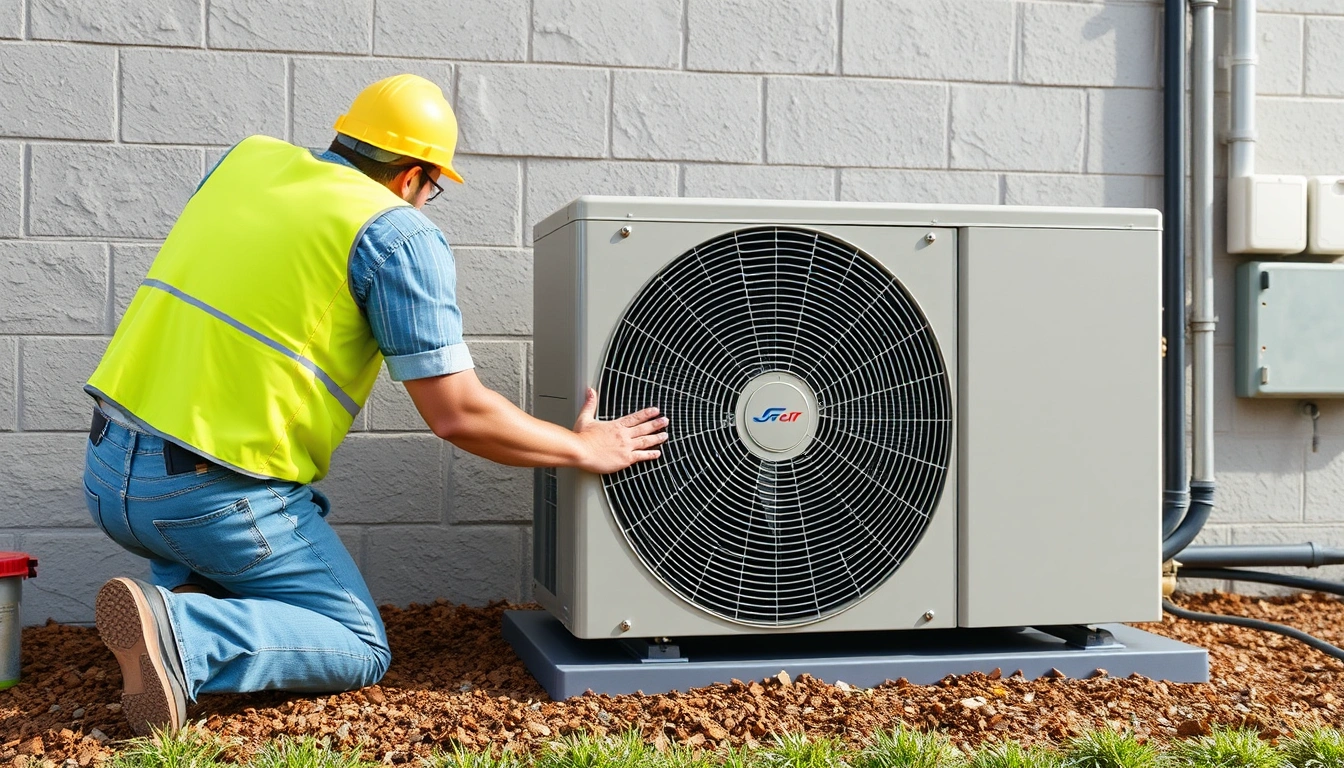
A 3-ton AC replacement installed in 2026 typically costs $4,500–$8,500 for a mid-efficiency system and $7,500–$11,000 for a high-efficiency SEER2 18+ unit, without ductwork. The 3-ton size is the most common residential HVAC size in the U.S., covering roughly 1,500–2,200 sq ft in most climates. That makes it the easiest size to price-shop because supply is high and contractor experience is universal.
Even within the mid-efficiency tier, that $4,000 swing has clear drivers. Brand tier matters, since Carrier and Lennox typically cost more than Goodman or Daikin at comparable specs. Labor market also plays a role, because HVAC labor in Austin runs 15–25% more than in smaller metro areas. Whether you need a new air handler in addition to the condenser adds another $800–$2,000. And refrigerant type affects pricing as well, because R-410A systems are being phased out in favor of R-454B and R-32 in 2026, which can shift both equipment and service costs.
3-ton system cost breakdown
| Cost component | Typical range | Notes |
|---|---|---|
| Condenser unit (outdoor) | $1,200–$3,500 | Equipment only; price varies by brand and SEER2 |
| Air handler (indoor unit) | $600–$2,200 | Often needs replacing with new condenser |
| Installation labor | $1,200–$2,500 | Varies significantly by metro area |
| Refrigerant charge | $150–$400 | R-454B/R-32 may cost more in 2026 |
| Permits and inspections | $75–$450 | Required in most jurisdictions |
| Ductwork (if needed) | $0–$6,000 | Add only if existing ducts fail inspection |
One detail most articles skip is refrigerant and coil matching. If you replace just the condenser unit and keep an older air handler, confirm the refrigerant compatibility and coil matching requirements. Mismatched systems can void manufacturer warranties and reduce efficiency by 10–20% even when both units technically function. That efficiency loss effectively erases the benefit of upgrading to a higher SEER2 rating.
The rule of thumb in 2026 is simple: if your air handler is over 10 years old, replacing it at the same time as the condenser may save money on the second service call you would otherwise make in 3–5 years. For a full comparison of repair versus replacement scenarios, the repair or replace HVAC system decision framework can help you run the numbers on your specific unit’s age and condition.
Quick check: Get at least three itemized quotes on any 3-ton replacement. If a quote bundles everything into one number without separating condenser, air handler, and labor, ask for the breakdown. A contractor who will not itemize is one you should think twice about hiring.
Your decision path: what to do based on your exact situation
The right HVAC replacement path depends on three variables in this order: your system’s age and repair history, your duct condition, and your planned ownership horizon. Start there, because HVAC replacement cost by size tonnage only makes sense when it is matched to your actual situation.
Situation A: System is 10–15 years old, first major failure
If your condenser unit or air handler just had its first significant breakdown and the system is between 10 and 15 years old, replacement is usually the right call if the repair cost exceeds $1,500. The standard industry rule is the 5,000 rule: multiply the system’s age by the repair cost. If the result exceeds $5,000, replace. A 12-year-old unit needing a $500 capacitor does not meet that threshold. A 12-year-old unit needing a $1,800 compressor does. With that decision made, follow these steps to move forward confidently.
- Get a diagnostic from a licensed HVAC technician, not a free estimate designed to sell you a system.
- Apply the 5,000 rule to confirm replacement makes sense financially.
- Get a duct leakage test before ordering new equipment.
- Price a mid-efficiency SEER2 16 system and a SEER2 18+ system with your SEER2 upgrade cost difference clearly itemized.
- Run the payback calculation: divide the SEER2 premium by your estimated annual energy savings. Your utility bill plus 25% for the efficiency difference is a reasonable starting estimate.
- Choose your unit, confirm the permit is pulled, and schedule installation at least 2–3 weeks out to allow for equipment lead times in 2026.
Situation B: System is over 15 years old, multiple repairs
Replace without overthinking it. Systems over 15 years old with a history of multiple repairs are statistically likely to fail again within 2–3 years. The efficiency gap between a 15-year-old SEER 10 system and a new SEER2 16 unit is large enough that new equipment commonly
See also: hvac repair [city]
See also: hvac permit requirements replacement
See also: hvac industry statistics energy data